- Chikmagalur Resorts for Family: A Complete Guide to a Relaxing Family Getaway
- Diamond Falls Chikmagalur Travel Guide: Location, Best Time to Visit & How to Reach
- Hyderabad to Chikmagalur Travel Guide: Distance, Routes, Best Places & Where to Stay
- Bangalore to Chikmagalur Road Trip: The Complete 2026 Route Guide
- The Kudremukh Trek: Complete 2026 Guide to Karnataka's Greenest Peak
- From Sufi Saints to Scenic Stays: The Journey of Coffee to Chikkamagaluru
- Luxury Resort Near Chikmagalur for a Relaxing Nature Escape
- Baba Budangiri The Complete Visitor's Guide
- Chikmagalur Famous Things to Buy
- The Ultimate 2-Day Itinerary for Chikmagalur
- 45+ Best Things to Do in Chikmagalur
- Waterfalls in Chikkamagaluru: The Complete Guide
- Chennai to Chikkamagaluru
- Hoysaleswara Temple, Halebidu A Complete Visitor Guide
- Bhadra Wildlife Sanctuary Travel Guide:
Baba Budangiri: Where Coffee History, Spiritual Harmony, and the Western Ghats Meet
Baba Budangiri: Where Coffee History, Spiritual Harmony, and the Western Ghats Meet
At 1,895 metres above sea level, Baba Budangiri is the second-highest peak in Karnataka — a ridge of ancient granite, shola forest, and mist-draped grassland that rises above the coffee country of Chikmagalur. It is a place that earns its importance not from one story, but from several that have layered themselves over centuries.
There is the legend of a Sufi saint who carried seven coffee beans from Yemen and planted them here, unknowingly setting the course of an entire agricultural tradition. There is the cave shrine — known as Datta Peeta or Inam Dattatreya Peetha — that is simultaneously sacred to Hindus and Muslims, one of the rare living examples of India's syncretic spiritual heritage. And there are the trails: the Sarpadhari ridge walk, the Mullayanagiri–Baba Budangiri traverse, the path down to Manikyadhara Falls. Each rewards a different kind of traveller.
This guide covers everything you need to know before visiting Baba Budangiri — its history, the shrine, the trek routes, practical visitor information, nearby places to visit in Chikmagalur, and where to stay. The Silver Sky Hotels & Resorts, one of the best luxury resorts near Chikmagalur, is located approximately 36 km from Baba Budangiri and makes an ideal base for the visit.
Baba Budangiri at a Glance
- Also Known As: Dattagiri, Chandra Drona Parvatha, Chandradrona Hills, Baba Budan Giri
- Altitude: 1,895 metres (second-highest peak in Karnataka)
- Distance from Chikmagalur: Approximately 34–40 km, about 1 to 1.5 hours by road
- Distance from Bengaluru: Approximately 270 km, 5 to 6 hours
- Entry Fee: Free (no entry fee for the shrine or trails)
- Shrine Timings: Open throughout the day; early morning visits recommended
- Best Time to Visit: October to March for clear skies and trekking; September for waterfall views
- Nearest Luxury Resort: The Silver Sky Hotels & Resorts, Chikkamagaluru (~36 km)
The History of Baba Budangiri: A Saint, Seven Seeds, and Centuries of Faith
Who Was Baba Budan?
Baba Budan was a 17th-century Sufi saint who travelled widely across the Islamic world and beyond, spreading teachings of peace, compassion, and spiritual unity. According to historical accounts and oral legend, he undertook a pilgrimage to Mecca and on his return journey stopped at the port of Mocha in Yemen, where he encountered coffee for the first time.
Enchanted by the drink's properties and its significance to Sufi meditative practice, Baba Budan smuggled seven raw coffee beans out of Yemen — a significant act, as the export of unroasted beans was strictly prohibited at the time. He carried them hidden against his body and, upon returning to India, planted them on the fertile, rain-fed slopes of these very hills in Chikmagalur, reportedly around 1670 AD.
Those seven plants are considered the origin of coffee cultivation in India. Today, Chikmagalur is celebrated as the birthplace of Indian coffee, and the hills bear the saint's name in permanent recognition of that act. The coffee plantation trail at The Silver Sky Hotels & Resorts — offered as a complimentary guided experience to all guests — tells this story in full, walking visitors through the Arabica and Robusta plants that descend from that original introduction.
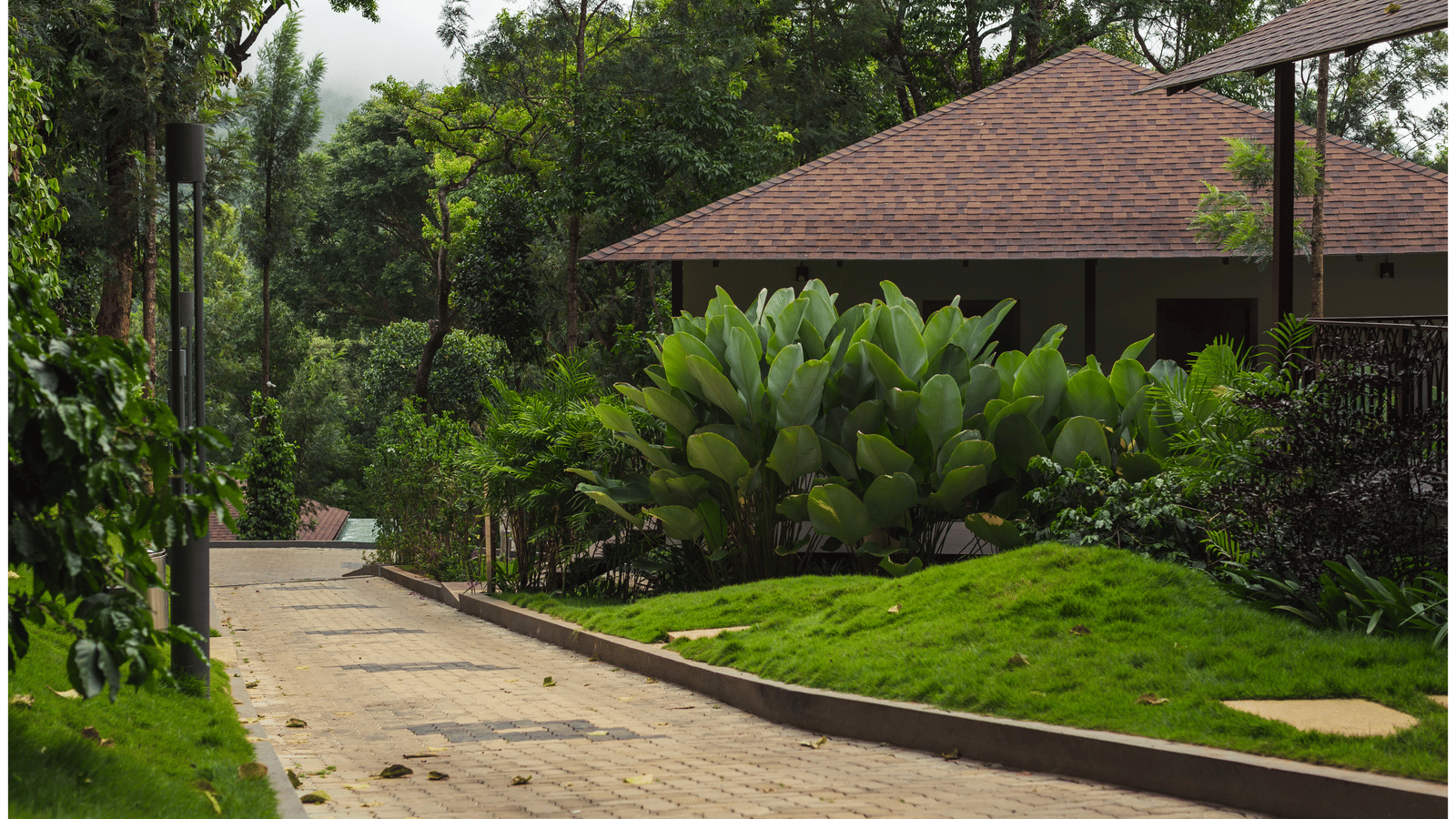
The Datta Peeta: A Shrine of Two Faiths
The cave shrine at the summit of Baba Budangiri is known interchangeably as Datta Peeta and Inam Dattatreya Peetha. It is one of the most fascinating religious sites in Karnataka precisely because it is genuinely shared between two traditions — not metaphorically, but in daily practice.
For Muslims, the cave contains the dargah of Baba Budan, also venerated as Dada Hayath Mir Khalandar, a direct spiritual descendant of the Prophet. For Hindus, the same cave is the abode of Lord Dattatreya — an avatar representing the trinity of Brahma, Vishnu, and Shiva — who is believed to have performed deep meditation (tapas) here. The caves of Dattatreya are accessible via a stairwell that rises from the dargah itself.
Within the cave, oil lamps burn continuously and incense hangs in the air. The Akhand Jyoti — an eternal flame established in the 20th century by Pandit Shriram Sharma Acharya of the All World Gayatri Pariwar — has burned without interruption ever since. It is said that over 2,400 crore Gayatri Mantras have been chanted at this site, giving it a palpable spiritual weight that visitors of all backgrounds tend to comment on.
During the annual Urs (commemorating the saint) and Datta Jayanti festivals, Sufi qawwalis and Hindu bhajans are performed together at the shrine. The sound of both rising simultaneously from the cave into the mist-covered hills is something travellers remember long after they leave.
The Name Chandra Drona Parvatha
The Baba Budan range was historically called Chandra Drona Parvatha — the Crescent Moon Mountain Range — because the ridge formed by Mullayanagiri and Baba Budangiri naturally traces the shape of a crescent moon when viewed from below. The two peaks together form the Chandradrona Parvatha Shreni: Mullayanagiri at 1,930 metres (the highest point in Karnataka) and Baba Budangiri at 1,895 metres (the second-highest). The visual of both peaks under dawn cloud cover, when the outline sharpens against the lightening sky, gives this name immediate and obvious meaning.
Things to Do at Baba Budangiri
1. Visit the Datta Peeta Cave Shrine
The shrine is the centrepiece of any visit. Remove your footwear before entering, dress modestly (avoid sleeveless or short clothing), and enter the cave with quiet respect. Both Muslim and Hindu traditions are observed simultaneously here — follow the lead of other visitors and the custodians of the shrine. You can light a lamp before the Akhand Jyoti or simply sit in meditation. The silence inside, punctuated by the occasional prayer, is profound.The cave is naturally cool, the air smelling of incense and lamp oil. Spend at least 30 minutes here — it's a place that rewards stillness rather than a quick look around.
Pro Tip: Visit on weekday mornings between 6 AM and 9 AM to avoid both crowds and the midday heat. Festival periods — particularly Urs and Datta Jayanti — are exceptional for experiencing the living tradition but draw large gatherings.
2. Trek: Mullayanagiri to Baba Budangiri (The Sarpadhari Trail)
This is the most celebrated trekking route in Chikmagalur. The trail begins at Sarpadhari — a Kannada word meaning 'path shaped like a snake' — located behind the Shiva temple at the Mullayanagiri peak. It is a moderate-level trek spanning approximately 9 to 12 km (routes vary by starting point) and takes 5 to 6 hours to complete.What to Expect on the Trail
A steep initial descent from Mullayanagiri summit into a shola forest corridor
The Blade Walk — a narrow ridge with steep drops on both sides, demanding careful footing but delivering extraordinary views across the Chikmagalur valley
Open grassland sections where wildlife — Nilgiri tahrs, Malabar giant squirrels, various raptors — may be spotted
Rocky moraine patches and gentle ascents as the trail approaches Baba Budangiri
The BSNL tower, which serves as a useful landmark in the final stretch (the peak is approximately 2 km beyond it)
Trek Details
Distance: 9 to 12 km depending on starting point
Duration: 5 to 6 hours (one way from Mullayanagiri)
Difficulty: Moderate — suitable for reasonably fit adults; steep in places
Starting Points: Sarpadhari (behind Mullayanagiri summit temple) or Attigundi village
Best Season: October to March; September offers lush greenery post-monsoon
Camping: Permitted at Baba Budangiri and near Manikyadhara Falls
Pro Tip: White paint marks on rocks and ridge stones guide the route — follow them carefully. Download the trail map offline before you leave as mobile signal is absent for long stretches. Carry at least 2 litres of water per person; there are no reliable water sources between the two peaks.
3. Trek to Manikyadhara Falls (from Baba Budangiri)
Located approximately 4 to 7 km from the Datta Peeta shrine (depending on the route taken), Manikyadhara Falls is a perennial 30-foot waterfall that drops from a lush clifface into a natural pool. The name translates to 'stream of pearls' in Sanskrit — an apt description of the way sunlight catches the falling droplets. The walk from the shrine takes about 90 minutes at a comfortable pace.Three sacred waterfalls are found in this vicinity: Gada Theertha, Kamana Theertha, and Nellikayi Theertha (formed by the Manikya Dhara water). According to Hindu mythology, Gada Theertha was created by the Pandava prince Bhima to quench his mother's thirst during their exile. Pilgrims often bathe in these waters as an act of devotion.
Pro Tip: Start from the shrine by 7 AM if you plan to visit Manikyadhara Falls on the same day as your trek from Mullayanagiri — the combined route is long and finishing before dark is important.
4. Alternative Shorter Treks
Budangiri to Gaalikere: 4 km — a shorter walk through forest to a scenic viewpointAttigundi Junction to Baba Budangiri: 6 km — accessible for those not starting from Mullayanagiri
Deviramma Betta: A hike through dense forest to an ancient hillside shrine, adventurous and relatively undiscovered
Sitalayanna Giri viewpoint: A short detour offering panoramic views of the surrounding mountain ranges
5. Coffee Plantation Walk
The Baba Budan range is surrounded by some of the oldest coffee estates in India — estates whose origins trace directly to the seven beans Baba Budan planted here in 1670. Many of these estates still produce Arabica and Robusta coffee for the Indian and export markets.Guests staying at The Silver Sky Hotels & Resorts can experience this story first-hand without leaving the property. The resort's working coffee plantation offers a complimentary guided trail that walks guests through the cultivation, harvesting, and processing of estate coffee, ending with a tasting of freshly brewed filter coffee on the farm. It is one of the most unique experiences available at any luxury resort near Chikmagalur and provides the historical context that makes the Baba Budangiri visit more meaningful.
6. Sunrise and Sunset Viewing
The viewpoints around Baba Budangiri — including those along the Sarpadhari ridge and near the shrine — offer some of the most dramatic sunrise and sunset views in Karnataka. At dawn, the valleys below fill with cloud that burns off slowly as the sun rises; at dusk, the light turns the Western Ghats amber and violet. The ridge walk at golden hour, if timing allows, is unforgettable.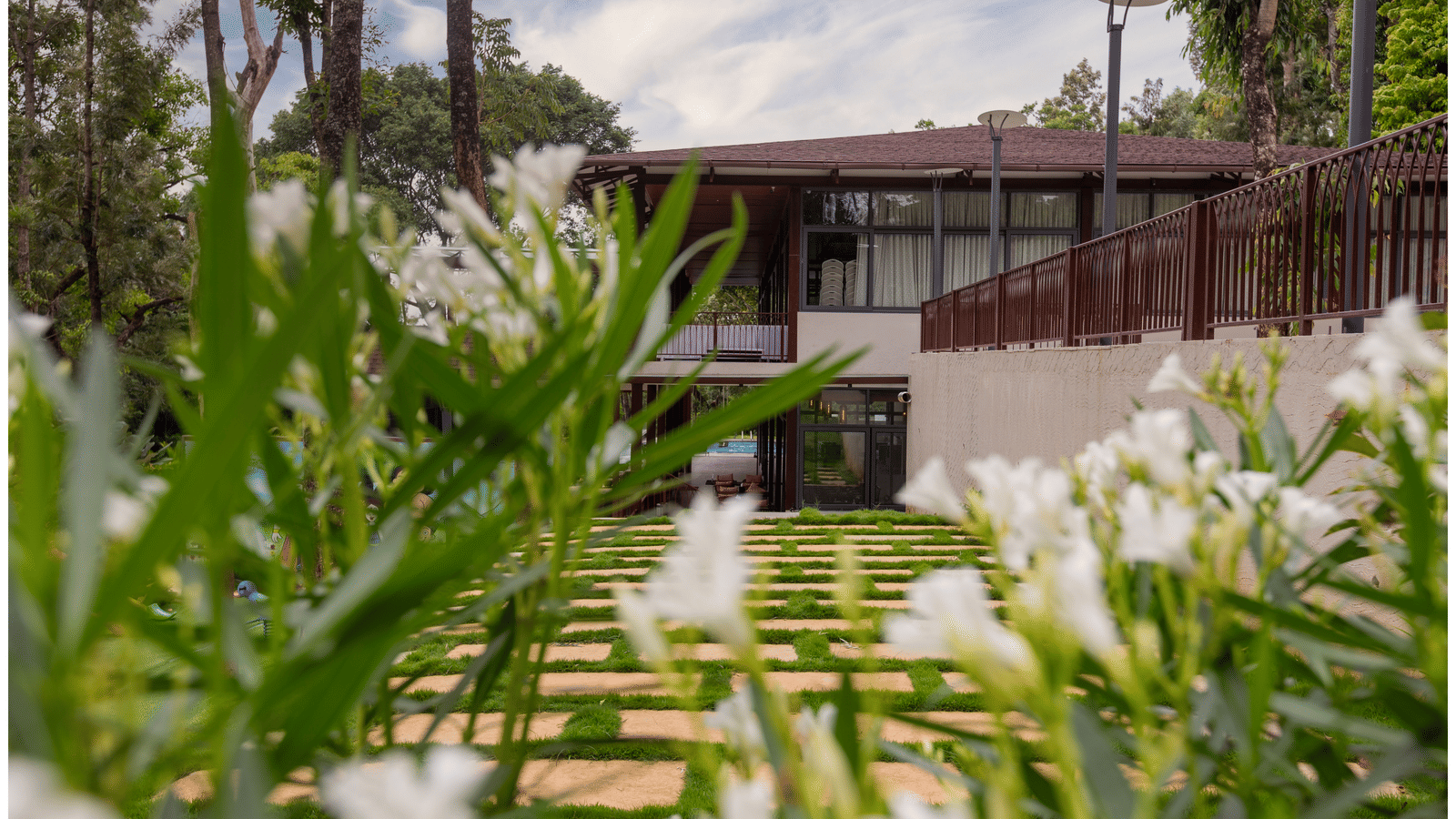
How to Reach Baba Budangiri
From Bengaluru
Drive via NH75 through Hassan to Chikmagalur (approximately 243 km, 4.5 to 5 hours). From Chikmagalur town, Baba Budangiri is a further 34 to 40 km via the Chikmagalur–Kemmannugundi road, taking about 1 to 1.5 hours. The total drive from Bengaluru to the shrine is approximately 270 km and 6 hours.A self-drive vehicle or hired cab for the full trip is the most efficient option. Public buses from Bengaluru to Chikmagalur are available (KSRTC), but onward connections to Baba Budangiri are infrequent — the first bus from Chikmagalur bus stand leaves at approximately 7 AM and services are unreliable after 5 PM. Hiring a local taxi from Chikmagalur is strongly recommended for reliability.
From Chikmagalur Town
The drive from Chikmagalur town to the Datta Peeta shrine takes 1 to 1.5 hours along a winding road through coffee estates and shola forest. Local taxis charge approximately Rs. 1,000 to Rs. 1,500 for the return trip. Shared jeeps from the Chikmagalur bus stand go to Attigundi (the trek base village) and charge approximately Rs. 20 to Rs. 30 per person.By Train
The nearest railway station is Kadur Junction, approximately 40 km from Chikmagalur. From Kadur, hire a cab or take a local bus to Chikmagalur, then continue to Baba Budangiri. The journey from Kadur to the shrine takes about 2 to 2.5 hours in total.
By Air
The nearest airport is Mangalore International Airport, approximately 150 to 170 km from Chikmagalur. Hire a cab from the airport — the drive to Chikmagalur takes about 3 hours, and continuing to Baba Budangiri adds another 1.5 hours. Kempegowda International Airport, Bengaluru, is the larger hub at approximately 270 km.
Visitor Information & Essential Tips
Best Time to Visit Baba BudangiriOctober to March is the ideal window for visiting Baba Budangiri. Temperatures during this period range from 11 to 25 degrees Celsius — cool enough for comfortable trekking, clear enough for views, and dry enough for safe trail conditions. October and November, just after the monsoon, offer especially lush greenery alongside passable trails.
June to September brings heavy rainfall to the Western Ghats. The hills are dramatically beautiful during this period but trails become slippery and navigation difficult; visiting without a local guide during the monsoon is inadvisable. April and May are warm but manageable if you start your day before 7 AM.
What to Pack
Trekking shoes or sturdy closed footwear — essential for the Sarpadhari trail and waterfall routes
Windcheater or light fleece — temperatures at altitude are noticeably colder, especially before 9 AM
At least 2 litres of water per person — water sources on the trail are unreliable
Light snacks and lunch — food options at the shrine are basic; the Manikyadhara Falls area has a few tea stalls
Raincoat or poncho — even in the dry season, afternoon mist and brief showers are common at this altitude
Camera with extra battery — the ridge views are excellent; phone batteries drain quickly in cold conditions
Offline maps downloaded before departure — no mobile signal for most of the trail
Modest clothing for the shrine — no sleeveless tops or shorts; both men and women should cover shoulders and knees
Shrine Etiquette
Remove footwear before entering the cave shrine and the immediate temple area
Dress modestly — this is an active pilgrimage site for both Muslim and Hindu devotees
Photography inside the cave varies by custodian discretion — ask before shooting
Maintain quiet and respectful behaviour inside the shrine; qawwalis and prayers may be in progress
Offerings of incense, oil lamps, and flowers are welcomed; littering is not
Safety on the Trek
The Sarpadhari ridge (Blade Walk) involves narrow paths with steep drops on both sides — do not attempt in poor visibility or rain
Start the Mullayanagiri–Baba Budangiri traverse by 6 AM to complete it with daylight to spare
Do not trek alone — go in groups of at least three, or hire a local guide (available in Chikmagalur town and Attigundi)
Do not schedule onward travel from the Chikmagalur area by public bus after 5 PM — last services are infrequent and unreliable
Camping is permitted at the summit and near Manikyadhara Falls — notify local authorities and carry adequate supplies
Places to Visit Near Baba Budangiri
Mullayanagiri Peak (5 km away by road; connected by 9 km trek trail)Karnataka's highest peak at 1,930 metres. The summit offers a 360-degree panorama of the Western Ghats and the Chikmagalur valley. A short Shiva temple sits at the top; the Dattapeeta cave (connected by local lore to the Baba Budangiri shrine) is nearby. Accessible by road to the base, followed by a 30-minute steep climb. The Sarpadhari trailhead for the Baba Budangiri trek begins behind the summit temple.
Manikyadhara Falls (7 km from shrine)
A perennial 30-foot waterfall translating to 'stream of pearls'. Walk 2 km from the motorable road, or trek directly from the shrine in about 90 minutes. Sacred to both Hindu and Muslim pilgrims; the three surrounding waterfalls (Gada Theertha, Kamana Theertha, Nellikayi Theertha) each carry their own mythology. One of the most peaceful spots in the Chikmagalur district.
Kemmannugundi and Z Point (29 km from Baba Budangiri)
The hill station called the 'Ooty of Karnataka', developed as a summer retreat by the Mysore royal family. Z Point is the headline attraction — a viewpoint at 1,500 metres with panoramic views across the Ghats valleys, named after the Z-shape of the terrain. The 3.5-km trek to Z Point from the main road is a pleasant, well-maintained walk. Raj Bhavan and the botanical gardens are also worth an hour.
Hebbe Falls (near Kemmannugundi)
One of the most celebrated waterfalls in Chikmagalur — a twin-tiered cascade (Dodda Hebbe and Chikka Hebbe) that drops through dense coffee and cardamom estates. Access requires a jeep ride through the private estate (private vehicles not permitted). The lower falls create a natural pool. Allow 3 to 4 hours including travel to and from the estate entrance.
Hirekolale Lake (36 km from Baba Budangiri)
A serene man-made lake hemmed in by the Western Ghats and coffee plantations, close to Chikmagalur town. Excellent for bird-watching, photography, and a quiet walk. Often combined with Mullayanagiri on Day 1 of a Chikmagalur itinerary.
Coffee Museum, Chikmagalur Town
Established in 2003 under the Coffee Board of India in Chikmagalur's Dasarahalli area, the museum holds over 1,000 artefacts documenting the history of coffee in India — from Baba Budan's original planting on these very hills to modern estate processing. It is divided into four sections: History of Coffee, Coffee Plantation, Coffee Processing, and Coffee Tasting. A logical companion to visiting Baba Budangiri — the museum gives the legend an institutional and historical frame.
Where to Stay Near Baba Budangiri: The Silver Sky Hotels & Resorts
The Silver Sky Hotels & Resorts is located approximately 36 km from Baba Budangiri and 10 minutes from Chikmagalur Main City — making it one of the most convenient luxury resorts near Chikmagalur for visitors planning a Baba Budangiri excursion.
The resort sits on a working coffee plantation — a living connection to the same agricultural legacy that Baba Budan is credited with beginning. Guests who visit the shrine in the morning and return to walk the resort's coffee estate in the afternoon complete a journey that spans the full arc of that story, from the mountain where the first beans were planted to a functioning estate that continues the tradition today.
Accommodation
- Coffee Cottage — Cosy rooms with large windows facing the plantation
- Coffee Cottage with Balcony — Same warmth, with private outdoor space
- Silver Ignots — Spacious rooms with contemporary finishes and plantation views
- Serenity Suites — The resort's premium offering, ideal for couples and special occasions
Resort Facilities
- Swimming Pool
- The Smudge Spa — in-house wellness centre with Ayurvedic and relaxation treatments
- The Silver Spoon — multi-cuisine restaurant serving Malnad specialities and continental dishes
- The Silver Peg — bar and lounge
- Complimentary Coffee Plantation Trail — guided walk through the working estate on the property
- Kids Play Area
- Gym
- Event and Banquet Spaces (The Spruce and The Sunset)
- Free Parking
Direct Booking Advantages
Early check-in and late check-out (subject to availability)
Exclusive 10% discount on all spa treatments at The Smudge
Room upgrade (subject to availability)
Website: www.thesilversky.in
Phone: +91 99 0066 0014 | +91 63 6697 1463
Email: info@thesilversky.in
Address: SY NO 449/2,3,4 Kalledevarapura, Kaimara PO, Chikkamagaluru – 577101
Suggested Day Plan: Baba Budangiri from The Silver Sky
6:00 AM: Depart The Silver Sky for Mullayanagiri (approx. 45 mins by car)
6:45 AM: Summit Mullayanagiri for sunrise — 30-minute climb to the top
8:00 AM: Begin Sarpadhari trek toward Baba Budangiri (9–12 km, 5–6 hours)
1:30–2:00 PM: Arrive at Datta Peeta shrine — visit, rest, light a lamp
2:30 PM: Walk or jeep to Manikyadhara Falls (4 km from shrine)
4:30 PM: Drive back to The Silver Sky via Chikmagalur town
6:00 PM: Return, pool or spa session at The Smudge
7:30 PM: Dinner at The Silver Spoon
For travellers who prefer not to trek the full 9 km traverse, an alternative is to drive directly to the Baba Budangiri shrine (1.5 hours from The Silver Sky), visit the Datta Peeta, walk to Manikyadhara Falls, and return — a comfortable half-day excursion that leaves the afternoon free for Kemmannugundi, Z Point, or Hebbe Falls.
Frequently Asked Questions About Baba Budangiri
Where is Baba Budangiri located?
Baba Budangiri is a mountain range in the Western Ghats of Karnataka, located in the northern part of Chikmagalur district. The shrine is approximately 34 to 40 km from Chikmagalur town and about 270 km from Bengaluru.
What is the height of Baba Budangiri?
Baba Budangiri stands at approximately 1,895 metres (6,217 feet) above sea level, making it the second-highest peak in Karnataka after Mullayanagiri (1,930 metres). Both peaks belong to the Chandradrona Parvatha Shreni — the Crescent Moon Mountain Range — named for the crescent shape the ridge naturally forms.
Who was Baba Budan, and what is his significance?
Baba Budan was a 17th-century Sufi saint who is credited with introducing coffee to India. He brought seven raw coffee beans from the port of Mocha in Yemen around 1670 AD and planted them on the hills that now bear his name in Chikmagalur. He is revered by both Hindus and Muslims — Muslims as the Sufi saint Dada Hayath Mir Khalandar, Hindus as a devotee connected to Lord Dattatreya's abode on these hills.
What is the Datta Peeta or Inam Dattatreya Peetha?
The Datta Peeta (also called Inam Dattatreya Peetha) is the cave shrine at the summit of Baba Budangiri. For Hindus, it is the abode of Lord Dattatreya — a composite deity representing the trinity of Brahma, Vishnu, and Shiva. For Muslims, the same cave contains the dargah of Baba Budan (Dada Hayath). It is one of the few active pilgrimage sites in India where both traditions are practiced simultaneously, making it an important symbol of India's syncretic spiritual heritage.
Is there an entry fee for Baba Budangiri?
No. Entry to the Baba Budangiri shrine (Datta Peeta) and the surrounding trails is free of charge. There is no entry ticket required.
How difficult is the Baba Budangiri trek?
The Mullayanagiri to Baba Budangiri trek (Sarpadhari Trail) is rated moderate difficulty. The total distance is approximately 9 to 12 km and takes 5 to 6 hours. It involves a steep initial descent, a narrow ridge walk (the Blade Walk) with drops on both sides, open grassland sections, and rocky moraine patches. It is manageable for reasonably fit adults with basic trekking experience. The Attigundi Junction to Baba Budangiri trail (6 km) is easier and a good alternative for those not starting from Mullayanagiri.
What is the best time to visit Baba Budangiri?
October to March is the best time for visiting Baba Budangiri. The weather is cool, skies are generally clear, and trail conditions are safe. September is also good for waterfall views at Manikyadhara. June to August brings heavy monsoon rainfall — the hills are beautiful but trails become dangerous without a guide.
Where should I stay near Baba Budangiri?
The Silver Sky Hotels & Resorts in Chikkamagaluru is an excellent base — approximately 36 km from the shrine, 10 minutes from Chikmagalur town, with comfortable cottages, a pool, spa, multi-cuisine restaurant, and a complimentary coffee plantation trail on the property. Booking directly at www.thesilversky.in gives access to early check-in, a 10% spa discount, and room upgrade options.
Can I combine Baba Budangiri with Mullayanagiri in one day?
Yes — the two peaks are connected by the Sarpadhari trek trail and are the most common combination. Start from Mullayanagiri at dawn, trek across to Baba Budangiri (5 to 6 hours), visit the shrine, and walk to Manikyadhara Falls before returning. It is a full day — depart from your resort by 5:30 to 6:00 AM and expect to return by 5:00 to 6:00 PM.
Plan Your Baba Budangiri Visit from The Silver Sky
Baba Budangiri is unlike most places on a Chikmagalur itinerary — it is simultaneously a pilgrimage site, a trekking destination, a wildlife corridor, and the living origin point of India's coffee history. It rewards the curious and the physically active equally.The Silver Sky Hotels & Resorts puts you 36 km from the shrine and within easy reach of every other place to visit in Chikmagalur — Mullayanagiri, Hebbe Falls, Kemmannugundi, Belur, and Halebidu. The on-property coffee estate connects you to the same agricultural story that began on these hills more than three centuries ago.
Book Direct: www.thesilversky.in
Phone: +91 99 0066 0014 | +91 63 6697 1463
Email: info@thesilversky.in
Address: SY NO 449/2,3,4 Kalledevarapura, Kaimara PO, Chikkamagaluru – 577101